
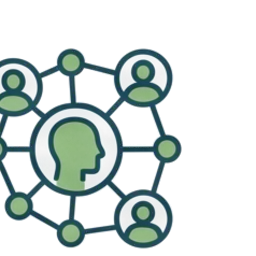
Most ongoing mental health care now happens close to home, delivered by teams that bring different professions together around a person's whole life.
Care built around a team
Ongoing mental health support is rarely delivered by a single professional working alone. A community mental health team typically brings together psychiatrists, mental health nurses, clinical psychologists, social workers and occupational therapists, along with support workers who help with the practical side of daily life. Each brings a different kind of expertise: medical assessment and prescribing, psychological therapy, help with housing, benefits and work, and support with the ordinary routines that can be hardest to hold onto during a difficult period. Rather than referring a person between separate services for each need, the aim is coordinated support that can adjust as circumstances change. This model reflects a simple observation: most people's mental health difficulties touch every part of their life at once, so care that only addresses a single strand of that picture tends to fall short, however well delivered that strand is.
Working where people live
The word "community" in community psychiatry is doing real work: it signals a shift away from care delivered mainly inside hospital walls, toward care delivered in someone's own home, GP surgery or local centre, wherever it fits most naturally into their life. Home visits let a team see how someone is actually managing, not just how they present during a brief appointment, and they remove the burden of travel from people who may be finding it hard to leave the house. For people going through a mental health crisis, some areas offer intensive home-based support as an alternative to a hospital admission, so that someone can stay connected to their own routine, relationships and responsibilities while getting a more concentrated level of help. This approach also allows a team to notice small changes early — a shift in mood, a missed appointment, a change in how someone's home looks — that might otherwise go unnoticed until a situation has become far more serious.
Staying connected across services
Community mental health teams do not work in isolation from the rest of the health system. They coordinate closely with GPs, who usually remain the main point of contact for a person's general health throughout; with hospital-based services for the times when more intensive or specialist care is genuinely needed; and with social care, housing and voluntary organisations that support the practical side of someone's life. A care coordinator, usually a named member of the team, often holds this picture together for the person, so that they are not left to explain their situation from scratch every time they see someone new. Continuity of this kind — the same faces, the same understanding of someone's history, carried across appointments — is something people who use these services consistently say matters most. This kind of coordination takes deliberate effort, since services with different histories, different records and different ways of working do not join up automatically; where it works well, it is usually because people across those services have made a sustained effort to communicate.